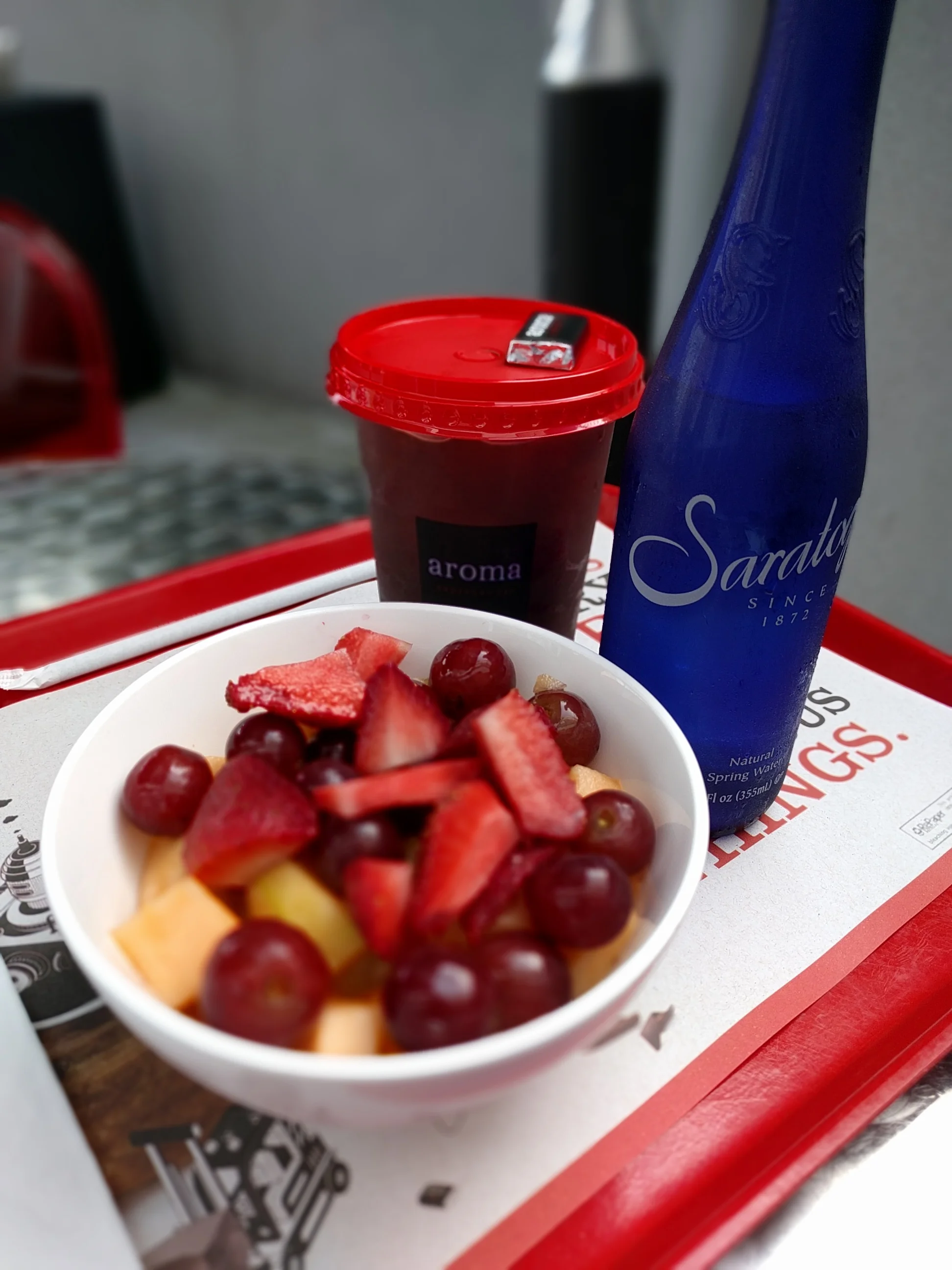
Eating for longevity

So for 21 days, you've suffered through some challenge posts. 


For all the complexity of the nutrition info out there, it really is summed up best by Michael Pollan:

"Eat (real) food. Not too much. Mostly plants."

It's simple to say, and hard to practice.

I've been slacking on the plants part, and even with this challenge, eating plants that aren't starchy or have gluten is difficult. If you can do the above for 3 months straight, then I'd say you can start to worry about other things like measuring and supplementation.

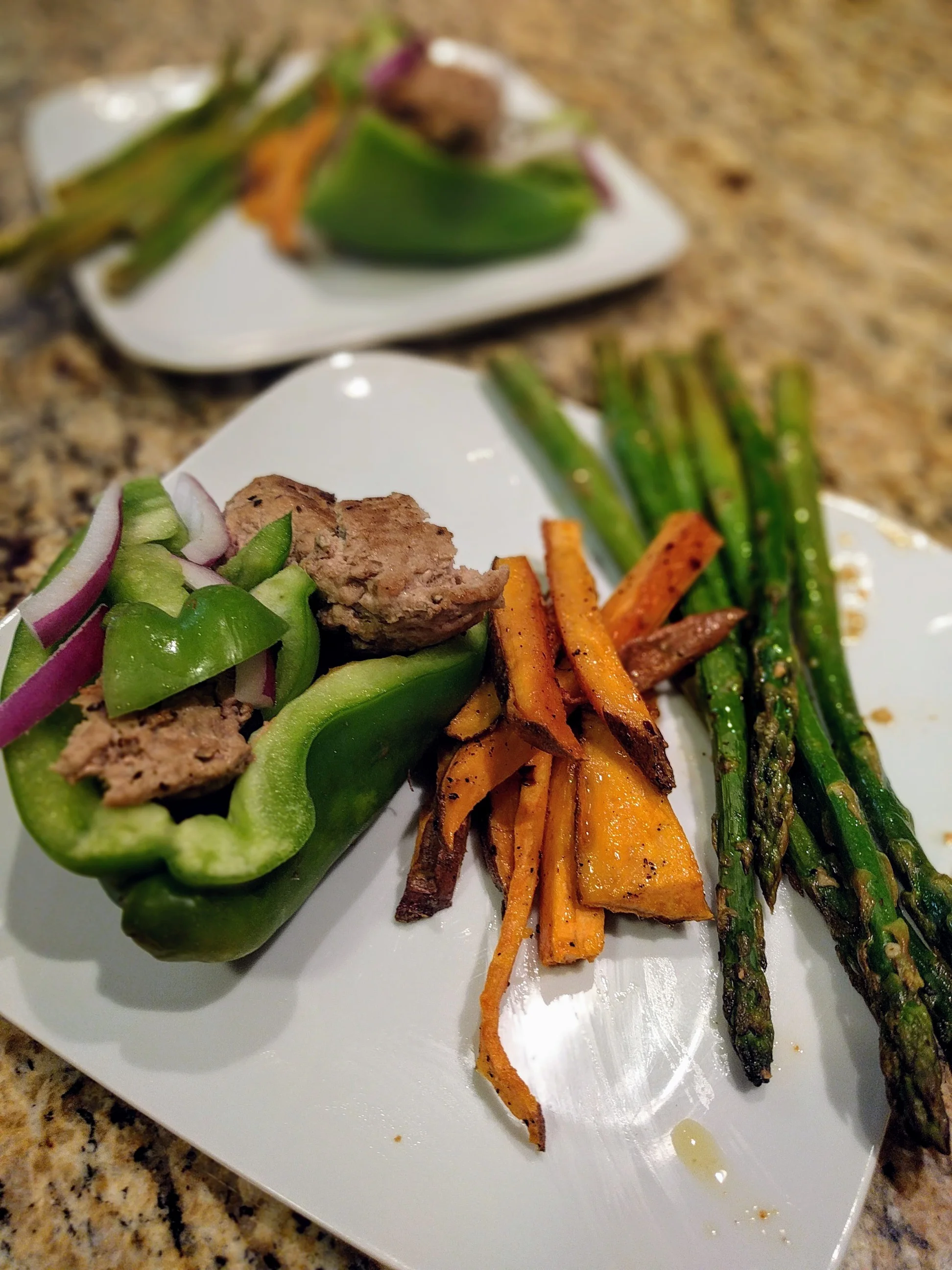
In other words, I'd boil it down to:

1. good food quality (and water)

2. then think about food quantity

3. lastly think about hydration, supplementation and blood testing to refine the above


My main goal was to:

1. avoid added sugar and sweeteners

2. avoid gluten

3. record my food for 21 days

(4. avoid alcohol, although that's pretty much covered by the sugar goal)


Note: I was not trying to stick to a particular macro ratio

The first picture is my "progress". Admittedly, there's not a drastic difference. The day 15 picture shows the biggest difference and came before I had to travel for work for 5 days and made some questionable choices while eating out. 

So what did I learn?

1. Any noticeable change is going to take time. I generally eat this way, going up and down with how strict I am. So to see progress, you're going to have to stick to it -- you're trying to change habits that have built up over years. 21 days is less than 6% of just one year. Patience is key.

2. For the first week, even though I avoided sugar, I was eating a lot of fruit and dried fruit. A sweetener is a sweetener no matter if it's "paleo" or not. Don't be surprised if you're not seeing much progress if you're eating larabars and paleo "donuts" during a challenge.

3. Even on the best week, the amount of fiber I ate was way low. I need to eat more leafy vegetables. A lot more.

4. I really don't see a need to count calories. If you don't eat a lot of dense carbs, it is soooo difficult to over-eat on quality foods. You will be cooking meals and eating celery all damn day.

5. Keep it simple.

6. Limit the decisions you have to make. On day 21 I wanted to quit early. But it was more effort to buy some junk to eat than it was to make a decent meal.

7. Make a goal for what you want your body to be able to do rather than what you want it to look like. I'd love to be able to overhead squat my body weight 10 times, run a 5 minute mile and do 10 muscle-ups. I for sure won't be able to get there if I look like a slob.

8. Have fun with it. Challenge some friends. Host an iron chef meal prep day. Buy a random vegetable you don't know the name of.

9. Surround yourself with supportive people.

10. Figure out what you're living for. If you want to be around for your kids or your career impact, the path to more years to attain that goal isn't lined with donuts and cigarettes. It's probably lined with vegetables (and the occasional slab of bacon).

I always thought my Grandfather was Puerto Rican

I always thought my grandfather was Puerto Rican. I realize for most people this would be a simple problem to fix, you would either ask your grandfather directly where he was born and where his parents were born, or if he had passed away, ask his wife or children where he was born. For me, and for my Mom, neither was a possibility.

Raised by her Mom and for a brief period, her foster family, my Mom never knew her biological father. Add to that the abyss of record keeping for African Americans before 1870 or so, and you end up with a person (me) who has never really been sure where his nationality lies before distant relatives "immigrated" (according to Ben Carson) to North Carolina. They probably read a nice brochure and weighed their options between that spot or somewhere in the Caribbean and chose the balmy tobacco fields of Tarheel country. Snarkiness aside, I have always wondered about my pre-American heritage.

For those of you who can trace your relatives back to the colonies or a specific ship, I am in awe. Growing up in a predominantly Italian town, I learned that families' records were sometimes murky, but common family names and Ellis Island archives have allowed many people I know to be able to trace how their last name's spelling has changed over the years, the town in Italy where their family spent much of their lives, and other knowledge tidbits that allow them to proudly fly an Italian flag below the American one.

For me, my knowledge of Africa is sparse at best. American history was the largest segment of history I learned, and that was heavily centered on lessons of the first Thanksgiving, Civil War battles and other trivia which I appreciate but leaves many other parts of the world forgotten. So, with a very thoughtful gift from my girlfriend, I sent in to AncestryDNA to have my heritage defined more explicitly.

AncestryDNA takes the data from my DNA markers and compares it to population data from 26 different regions. After running this comparison 40 times to get the best estimate of what regions my family genetically connects to based on current research,  AncestryDNA gave me an ethnicity estimate. It is just that: an estimate. The estimate could change over time, depending on what new research might reveal. 

After this whole process, my results narrowed down to the regions below. West Africa, parts of the Mediterranean and a concentrated area of North Carolina.

My first reaction was frustration. Really - after years of science progress, I know now that my roots are somewhere on the coast of Africa? Some economics and straight lines drawn with a ruler could have given me that answer.

But, I suppose there's more.

The results show me a lot about what's not there. I had always been under the impression that I had some Spanish or Latin American heritage from what my Mom told me about her father and where he and her Mom met. The numbers show differently. Not a trace of Spain or Latin American anything are in the results. I had taken a kind of DNA grouping test before and had results come back from Sudan and other parts of Northeast Africa. I am told I look Ethiopian by many Ethiopians. Nope, not in the numbers.

It appears that whether it's Nigeria, Cameroon or Benin, my family's roots are in West Africa. I know there are debates about how accurate these results are, how they are populated by a small number of black or African samples, and other evolving scientific conerns. But what do these results tell me? With this process, I was hoping to have a better answer for the eternal ambiguous question "But where are you from?" which follows the question "where are you from?" From these results, I do not have a solid nationality I can point to. But at least now I have a place I can start.

I can start with the basics of these countries - Nigeria, Cameroon, Benin. I can begin to follow their news, I can begin to learn about their leaders. I can read basic history and start to understand how such a vile slave trade began. I can visit.  I can read the countries' literature and solidify my family's connection to other countries before America at family reunions and gatherings. Down the road, I can point people in a better direction when they group Africa into one country or appropriate what they do not know much about.

And most importantly, I now have a legitimate excuse to learn how to make another great rice dish, some Jollof Rice to be exact. What's more exciting than learning about a new country through their food?

However, the exact percentages above made me think of some other questions. Above what percentage do you get the right to claim a country as your own nationality? What is the highest nationality percentage out there? Is a 90% nationality something to be proud of at this point in human history? What answer from Ancestry would have satisfied me?

jollof rice.jpg

I don't have the answer to any of those questions right now, and if you take a DNA ancestry test, I'd love to know your reaction and what you did with the information. President Obama had a unique perspective on matters of race and an outlook that he shared more and more in his second term. In his graduation speech to Howard University, he said: 

"We cannot sleep walk through life. We cannot be ignorant of history. We can't meet the world with a sense of entitlement... We have cousins and uncles and brothers and sisters who we remember were just as smart, just as talented as we were, but somehow got ground down by structures that are unfair and unjust and that means we have to not only question the world as it is, and stand up for those African Americans who haven't been so lucky."

I know now that my grandfather probably wasn't Puerto Rican, and I also know that for whatever reason, I have been lucky enough to have been born in a time and place where many things are possible. More background in my heritage gives me a greater personal reason not to be ignorant of history and to not only question how many of us got here, but more importantly, where we can go from here.

Bar do David - the 2 Sides of Rio

The novelty of arriving in a foreign place and swiping my phone a few times to get picked up in air conditioned comfort had not worn off. Mostly for the air conditioning. We had arrived in Rio after a few days in the North of Brazil in the city of Salvador, a pace filled with music, European architecture and the occasional gringo.

Once in Rio de Janiero, it wasn't long before the snarling traffic and busy streets gave up their fight to block the city's natural beauty and I was staring at miles of oceanfront, or at a minimum, grassy hillsides which blocked the blue sky. We had given our Uber driver the address for our Airbnb accomodations. That sentence could mean a lot of things depending on where you are. In New York, that could mean an $80 ride to go 3 miles for a sky-high apartment. But for us it meant a $15 ride to the outskirts of the Favela do Leme, a police-protected favela on the outskirts of Leme beach, just to the northeast of Copacabana. 

If the Airbnb pictures lived up to the hype, we would be relaxing in a hammock in no time. As the car pulled up to Bar do David, the local restaurant and bar at the base of the steep hill of the favela, we were greeted by a flurry of activity. The wait staff sat down next to customers taking orders in outdoor seating that blended into the street itself. Next to Bar do David was a less pricey restaurant which barely attempted to distinguish itself between home and dining establishment. 

IMG_20160415_064824.jpg

This was the Leme Favela - everything moving at once - kids playing after school, the sounds of futbol and gospel-influenced music blending together. Smells of Bar do David's carefully prepared food transitioned to aromas closer to the streets of New York as we climbed the hill tour Airbnb not-quite-paradise. The above picture of the apartment was the highlight - there's a reason the bedrooms weren't shown in the original listing... No matter - Bar do David was really good - we went there 2 times, and it reflected the 2 sides of Brazil fighting for the spotlight.

The first time we came to Bar do David was the authentic Brazil.

"Do you know this man?" David himself, the owner of the bar and restaurant proudly held a photo of a businessy-looking white man. From David's grin ear to ear I knew I was expected to know the main in the photo posing with David. 

"Err... ahh.. Oh, I can't think of it."

"Michael Bloomberg!" David exclaimed. I know the basics of Bloomberg's background, but I admit that "old white man" would have been my best guess with politics thankfully out of my mind for the past few days of the trip.

"Oh wow, that's awesome," I replied. I was genuinely surprised which can often be confused with sarcasm since the range of my inflection is as broad as the back of a Fiat.

"He came to visit - right here." David was beaming at this point. And it was clear why the community around Leme was so proud of this place. The food was of course very good. Simple dishes like pork and beans, steak and salad, fried fish and mashed potatoes - all of which sound better explained in Portuguese, all for about $3 US.

But more than the food, Bar do David represented the warmth of being welcome. It represented the simplicity of what locals love about Rio and maybe Brazil in general. Simple, bold flavors, enjoying the warmth of the sun, being close to a stiff drink, but never getting too far from family. It was a great introduction to the favela, which still had its rough spots. Outside of the aromatic food, a few yards away from the restaurant were the smells and sights of real life. Laundry drying, pets roaming (and leaving a trail), graffiti that celebrated Brazil but also complained about life's hardships. 

Our waitress was patient with us as we translated the menu word by word and smiled with a nod as we (mostly my girlfriend) suggested Spanish translations for the Portuguese words of "grilled", "soup", and "blackened". 

"Sim, Sim!" She agreed with a smile. Looking both frazzled and happy at the same time. She was around 7 months pregnant, we learned, hoping to name her daughter Sofia. For a second, we felt a part of the small community. To our eyes, worries about the stalling economy, impending impeachment proceedings and other news-cycle concerns didn't seem to be on the minds of those around us. But then again, the crashing waves close by do wonders to lessen the noise of all those struggles. 

The second time we came to Bar do David we seemed to experience the Brazil the world it expects it to be. With the World Cup a few years ago, and the upcoming Olympics. Brazil (Rio especially) wants to continue proving to the world that it is a world-class place. Walking around Ipanema, Santa Theresa and the houses by Rio's lake - it seems to be true. There are beautiful people and expensive restaurants. Bikeshare racks line the streets between vendors selling everything from coconuts to fried cheese. (I really don't understand fried cheese as a beach food - vendors set up a small fire of charcoal and then heat up the cheese for you to enjoy in the hot sun. Sounds refreshing?...)

The entertainment side of Rio does live up to the hype. But still, it's as if the beachfront would like to be a 24/7 music video in real life. It seems to be what tourists expect, no matter how hard it is for locals to afford the food, or how long it takes for beach rental stands to set up the yards and yards of umbrellas, caipirinha tables, volleyball nets and beach chairs. 

As we sat at Bar do David the second time, our server was just as friendly, but a little more tired. Bar do David was applying for one of its dishes to be nominated in a regional "Best of Rio" contest. She was dutifully folding flyers and describing the seafood appetizer to the bar patrons. Bar do David was trying to establish itself as more than a watering hole for the favela community and tap into the more lucrative Rio tourism scene. As we sat, a promotional yellow car rolled up, blaring music. Out stepped a male and female model, smiling and high-fiving the formerly peaceful Bar do David patrons. 

Shots of Santa Dose were poured. A disturbingly tasty combination of banana and cachaca, the promoters circled the bar, bringing the blaring music of Lapa into the relatively quiet hillside.

The sweet shots and bumping music reminded me of the constant battle to exude the club vibe that is the Rio stereotype - easy women, flowing drinks, glistening sand. But at the same time, people have to live. Little Sofia will be born in a few more weeks to a country struggling to live up to its BRIC expectations that were so promising 10 years ago. Michel Temer's temporary place of leadership has a lot to address as he leads while Rousseff defends herself during the simultaneous gold medal battles ensue. 

I loved my short stay in Rio and a few other places in Brazil. It's a country that celebrates its African influences, rather than tucking them away, as some places in South America do. It's a country that knows it has many natural resources but also knows beauty is nothing without having friendly people. I can pretend that all of Rio's struggles were summarized in two visits to a small bar/restaurant in a favela, but that's far from the truth. Like any country, it's story takes a lifetime to experience and generations to understand.

Regardless, go visit Rio and any other place in Brazil when you can. It lives up to the hype, even if the hype is being forced on you by the latest sponsored liquor.